Rohit Dhankar
“… that alone will be a true and living education which helps to bring out to full advantage, makes ready for the full purpose and scope of human life all that is in the individual man, and which at the same time helps him to enter into his right relation with the life, mind and soul of the people to which he belongs and with that great total life, mind and soul of humanity of which he himself is a unit and his people or nation a living, a separate and yet inseparable member.” (Sri Aurobindo, Early Cultural Writings, in THE COMPLETE WORKS OF SRI AUROBINDO, Sri Aurobindo Ashram Publication Department, Pondicherry, 2003, p.425)
Aurobindo here is talking of three deeply interconnected but independent entities: one, the Individual; two the Nation or the people to whom that individual belongs; and three, Universal Humanity.
(1) For the Individual: he recommends “bring out to full advantage, makes ready for the full purpose and scope of human life all that is in the individual man”. That means development of the Individual educatee’s mental (including moral), physical, and emotional (including relational) capabilities to prepare him/her to the full purpose of human life. In today’s India this would mean development of understanding (knowledge), values and practical skills to finds one’s appropriate place in the society and choose the kind of life one wants to live.
(2) For the nation: Aurobindo considers an Individual in the society or the people to whom s/he belongs; what he seems to have in mind is the nation. Education according to him “helps him (the individual) to enter into his right relation with the life, mind and soul” of the nation. What does entering into right relation with life, mind and soul of the nation mean? Certainly, it means understanding the national life, the way national society thinks and makes choices, and the deeper moorings of the national thought in terms of cultural and spiritual beliefs, historically formed over many millenia. This kind of understanding will include a sense of belonging, appreciation, pride as well as critical analysis of the functioning and repertoire of beliefs in the society. A blind faith or love or devotion cannot be called a “right relation”, nor a detached disdain can be called so. Blind faith etc. goes against development of the full capabilities of the individual, point (1) above, because full purpose of life most certainly includes making right choices on one’s own as well. Detached disdain cuts the very basis on which individual ‘self’ and self-respect can develop.
(3) For the Universal Humanity: For Aurobindo the nation is part of the “great total life, mind and soul of humanity” as an individual is part of the nation. The individual has a twin relationship with the universal humanity: himself/herself as a member and through his/her nation which is also a “separate and yet inseparable member” of universal humanity. “Separate” perhaps here means “an undoubtedly distinguishable” (Indian, American, Chines, etc.) and “inseparable” as they all are possible in the totality of universal humanity and are certainly shaped and guided and nurtured by it. Thus, one is an Indian (for example) and a human. Her Indianness gives her a distinct identity and her humanity gives her a larger picture within which she judges, evaluates and even shape the Indianness. This kind of ‘twin relation’ negates aggressive nationalism where one nation becomes a perpetual rivel in conflict with all other nations. This helps the individual develop a nationalism which has deep benevolence to all other nationalities and urges him/her to understand them and cooperate with them, recognizing their right to flourish as of his/her own nationality.
This three pronged ideal of education makes the vision of education well rounded and complete. It prepares the student for a robust national life as well as global responsible citizenship, and universal brotherhood.
How does one bring this ideal to the practice in all our schools? We at Digantar exploring this and many other such ideals through appropriate educational practices. And find much common in other universal ideals of education with this.
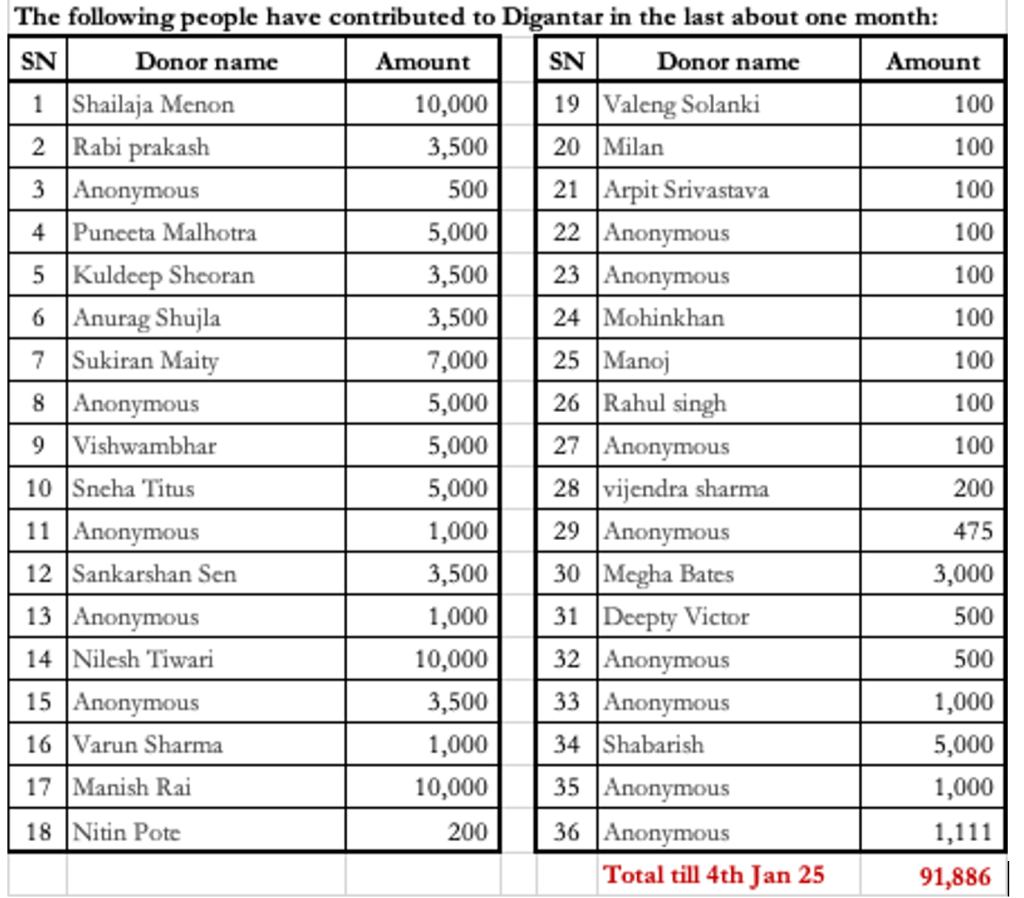
You can also support Digantar by donation:
https://give.do/fundraisers/help-sustain-free-and-quality-education-of-underprivileged-children
Please also share the link.


 Posted by Rohit Dhankar


 Thinking Aloud