Why do we want Universalisation of Elementary Education?

August 11, 2013

Rohit Dhankar

As a nation India is committed to universalisation of elementary education[1] (EE), at the least on paper, even if the action encourages scepticism about this commitment. There is also a push to extend this commitment to secondary[2] level. There is an act called “The Right of Children to Free and Compulsory Education Act, 2009”, in short RTE Act, to guarantee universalisation of quality education. There is a national consensus on this, stamped by the parliament.

We might feel comfortable about this national consensus and may think the matter settled. But there are debates on ways of achieving universalisation of EE, on whether the private schools should be forced to admit 25% at fee decided by the government, on what constitutes quality, whether no-examination and no detention is a good policy, what continuous and comprehensive evaluation (CCE) happens to be, and so on. We are trying to construct generally acceptable answers to these and a host of other such questions. In this context I want to pose a few old and baring questions yet again. First of them being: why do we want universalisation of elementary education?

This issue is considered debated enough and settled finally, which means we have a generally acceptable and accepted answer to it. That might be true. The policy makers and administrators might have an answer to this, the educationalists and university professors also might have an answer to this. But one wonder if every worker in education does. Does the community worker trying to mobilize local support for school improvement have an adequate answer to this question? Do the teachers have such an answer? Do most of the teacher educators have one? If they all do, are their answers coherent with each other? I am not sure.

Usually the kinds of answers we provide for the basic questions have a great influence on the further questions we raise and on their acceptable answers. There is good reason to believe that the kind of answer we construct and accept for “Why UEE?” will influence all our further questions like whether 25% quota should be mandatory, whether no detention policy is good, how do we define quality of education and so on. If all his be acceptable, the question “Why do we want universalisation of elementary education?” seems to be worth engaging with.

Therefore, I request those who happen to read this post to give their answers to this question in comments or any other way they like. I also request to please keep your answers within 1000 word and out of those 1000 do not in quotations more than 250 words.

So, why do we want universalisation of elementary education?

—————————————————————————–

11th August 2013


[1] Elementary Education means education for eight years, officially defined as from 6 to 14 years of age; in common parlance education up to 8th grade.

[2] Secondary Education is supposed to be from 9th year to 12th year of schooling; or 9th grade to 12th grade. 9th and 10th grades are referred to as lower secondary and 10th and 11th as higher secondary.


धर्म की धोंस-पट्टी और शिक्षा

August 10, 2013

रोहित धनकर

आज सुबह ‘द हिन्दू’ अखबार में पढ़ा की अब मुस्लिम क्लेरिक्स (उलेमा?) कहते हैं की भारती ने उनकी धार्मिक भावनाओं को आहत किया है, अतः वे उन पर मुकदमा चलाएंगे। वास्तव में जब लोग धार्मिक भावनाओं के आहात होने के आधार पर लोगों की जुबान बंद करने की कोशिश करते हैं तो बहुत से भारतीयों की लोकतांत्रिक भावनाएं बहुत आहात होती हैं। शायद मैं भी उनमें हूँ। पर मुझे ऐसा भी लगता है की देश और खासकर लोकतंत्र भावनाओं के बल-बुत्ते नहीं चल सकते, तो सोचा थोडा देखलें की भारती ने ऐसा क्या कहा जिस से किसी की धार्मिक भावनाएं आहात हो सकती हैं। जब कुछ ख़ोज-खबर की तो दो चीजें मिली। वे नीचे दी हैं।

“आरक्षण और दुर्गाशक्ति नागपाल इन दोनों ही मुद्दों पर अखिलेश यादव की समाजवादी सरकार पूरी तरह फेल हो गयी है. अखिलेश, शिवपाल यादव, आज़म खां और मुलायम सिंह (यू.पी. के ये चारों मुख्य मंत्री) इन मुद्दों पर अपनी या अपनी सरकार की पीठ कितनी ही ठोक लें, लेकिन जो हकीकत ये देख नहीं पा रहे हैं, (क्योंकि जनता से पूरी तरह कट गये हैं) वह यह है कि जनता में इनकी थू-थू हो रही है, और लोकतंत्र के लिए जनता इन्हें नाकारा समझ रही है. अपराधियों के हौसले बुलंद हैं और बेलगाम मंत्री इंसान से हैवान बन गये हैं. ये अपने पतन की पट कथा खुद लिख रहे हैं. सत्ता के मद में अंधे हो गये इन लोगों को समझाने का मतलब है भैस के आगे बीन बजाना.” –कँवल भारती।

“उत्तर प्रदेश में सपा सरकार ने नोएडा में आईअस अफसर दुर्गाशक्ति नागपाल को निलंबित कर दिया, क्यों की उन्होंने रमजान माह में एक मस्जिद का निर्माण गिरवा दिया। यह निर्माण अवैध रूप से सरकारी जमीन पर हो रहा था। लेकिन, रामपुर में रमजान माह में जिला प्रशासन ने सालों पुराने इस्लामिक मदरसे को बुलडोज़र चलवाकर गिरवा दिया। विरिध करने पर मदरसा संचालक को जेल भिजवा दिया। इस मामले में अखिलेश सरकार ने अभीतक किसी अफसर को निलंबित नहीं किया। ऐसा इसलिए नहीं किया गया, क्योंकी यहाँ अखिलेश का नहीं आजम खां राज चलता है। उनको रोकने की मजाल तो खुदा में भी नहीं है।”–कँवल भारती।

पहली टिपण्णी में तो धर्म का जिक्र तक नहीं है। तो उस से धर्किक भावनाओं के आहात होने का तो सवाल ही पैदा नहीं होता। दूसरी टिपण्णी में तीन बातें हैं जिन से कुछ लोगों को बुरा लग सकता है। पहली,  रमजान माह में सरकारी जमीन पर मस्जिद के अवैध निर्माण के गिरना। दूसरी, एक मदरसे को गिरना। और तीसरी, आजम खान को तो खुद भी नहीं रोक सकता। मैं अभी भी नहीं समझ रहा की इन कथनों से धार्मिक भावनाएं कैसे आहात हो सकती हैं?

पहला और दूसरा कथन तो बस दो वास्तविक घटनाओं को इंगित करते हैं। वे सही या गलत (सत्य या असत्य) तो हो सकते हैं, पर भावनाओं से उनका क्या लेना-देना है? तीसरा कथन खुदा की असमर्थता बताता है, आजम खान को रोकने में। यह इक मुहावरा है: खुदा भी नहीं रोक सकता, और इसका उपयोग हिंदी भाषा में आम बात है। इसके उपयोग के हजारों उदहारण हिंदी साहित्य में कोई भी आधे घंटे की मशक्कत करके ढूंढ सकता है। जो मुहावरा इतने आम चलन में है इस से भावनाओं के आहात होने का क्या मतलब हो सकता है? येदि खुदा की असमर्थता बताने को मुद्दा बनाया जाए तो भी कुछ समझ में नहीं आता। बहुत लोगों का मानना है की खुदा तो मानव-मन का एक असम्भव और तार्किक रूप से असंगत विचार भर है। तो वह बेचारा अतार्किक विचार कहाँ से समर्थ होगा? लोगों के ऐसा मानाने या कहने से यदि भावनाएं आहात होती हैं तो बड़ी मुश्किल खड़ी हो जायेगी।जब कोई भी ऐसी बात कहेगा जो मैं नहीं मानता तो मेरी भावनाएं आहात होजायेंगी और मैं उसका मुंह बंद करने के लिए मुकदमा चलाने की धमकी देने लगूंगा। तो भाई बात-चीत कैसे होगी? विचारों का आदान प्रदान कैसे होगा? हम एक दूसरे को समझेंगे कैसे?

वास्तव में मुझे न तो यह भावनाओं का मामला लगता है नाही धर्मका। यह धर्म के नाम पर खुली धोंस-पट्टी है। किसी भी शहर की सड़कों के बीच में मंदिर-मस्जिद के रूप में इस धोंस-पट्टी के सैकड़ों उदहारण देखे जासकते हैं। लोगों के विचारों पर लगे प्रतिबन्ध और परबंधित किताबें भी इसी धोंस-पट्टी के उदहारण हैं। अब सवाल यह है की धर्म के नाम पर यह धोंस-पट्टी चलाती क्यों है?

यह धोंस-पट्टी चलाती क्यों है?

राजनैतिक तौर पर एक बड़ा कारण यह है की सभी भारतीय राजनैतिक पार्टियाँ लोगों को धार्म के नाम पर बर्गलाने में विस्वास रखती हैं। चाहे वह कोंग्रेस हो, बीजेपी हो, या कोई और। यह बात सब मानते हैं। पर यह बीमारी का वर्णन भर है, उसका कारण नहीं। राजनैतिक पार्टियाँ यह नीति इसलिए अपनाती हैं क्यों की उनको विस्वास है की भारतीय नागरिक येही पसंद करता है। तो हमें इस धोंस-पट्टी के प्रभावी होने के असली कारण भारतीय नागरिकों के सोचने-समझे, उनके व्यवहार में और उनके चरित्र में ढूँढने चाहियें। हमें अपने मन में झांकना चाहहिये और अपने कर्मों को देखना चहिये। तभी हम इस रोग के असली कारणों को समझेंगे। मैं यहाँ किसी प्रकार की आत्मा शुद्धि की नहीं सामाजिक अध्यान की बात कर रहा हूँ। हमें बहुत से सामाजिक अध्ययनों की जरूरत है जो हमारे अपने व्यवहार के पीछे कारणों को समझने में मदद कर सकें।

मुझे शक है की हम लोग लोकतान्त्रिक नागारारिक के लिए आवश्याक काबिलियेतें और मूल्यों में बहुत कमजोर हैं।

लोकतंत्र में नागरिकों को एक साफ़ सामाजिक दृष्टि की जरूतात होती है और उस दृष्टि को चरितार्थ करने के लिए काम करने के लिए तैयार रहने की जरूरत होती है। हमारी सामाजिक दृष्टि आत्मकेन्द्रित है और जो जैसी भी है हम उसको चरितार्थ करने के लिए कुछ भी प्रयत्ने करने से कतराते हैं। हम उसे चरितार्थ करने की जिम्मेदारी सरकार की मानते हैं।

लोकतंत्र के नागरिक में साफ़ सोचने और इसको बे झिझक अभियक्त करने की काबिलियत चाहिये। हम लोग सोचने से भी कतराते हैं और कहने से तो बहुत ही डरते हैं, ख़ास कर आजकल। लोकतंत्र में दूसरों के भले-बुरे के प्रति संवेदनशील होने और उनके अधिकारों का हनन होने पर उनके साथ खड़े होने की जरूरत होती है। हमारी आत्मा-केन्द्रितता दूसरों के साथ अन्याय होने पर उस अन्याय को समझने और उसका विरोध करने से हमें रोकती है।

हम फिरकापरस्त और पक्षपाती लोग हैं। हाल ही में हिन्दू जागरण मंच को गुडगाँव में सरकारी जमीन पर कब्ज़ा करती मस्जिद तो दिख गई पर भारत भर में सरकारी जमीन पर कब्जा करते सैकड़ों मंदिर उसको कभी नहीं दिखेंगे।

शिक्षा की भूमिका

मैंने ऊपर जो कुछ भी कहा है उसमें कुछ भी नया नहीं है। ये आम बातें हैं जो हम सब जानते हैं। सवाल यह है की लोकात्नात्र के लिए जरूरी काबिलियतें और मूल्य आयेंगे कहाँ से? हमारी शिक्षा पर बने कई कम्मिसनों और कमेटियों ने इन सब चीजों का जिक्र किया है। इन पर बहस की है और इन को शिक्षा के उद्देश्यों में शामिल करने की बात की है। वास्तव में ये मूल्य हमारी शिक्षा के उद्द्येश्यों में शामिल हैं भी। दाहरण के लिए हम राष्ट्रीय पाठ्यचर्या २००५ को देखें तो पायेगे की लोकतांत्रिक मूल्यों की समझ और उनके लिए विवेकशील प्रतिबद्धता को महत्त्वपूर्ण उद्द्येश के रूप में लिखा गया है। और लोकतांत्रिक मूल्यों में धर्मनिरपेक्षता, समानता, न्याय, दूसरों के प्रति संवेदनशीलता, आदि का जिक्र है। साथ ही विचार और कर्म की स्वायत्तता भी शिक्षा के उद्द्येश्यों में दर्ज है। यह कोई नयी बात भी नहीं है, शिक्षा के उद्द्याशों में इस तरह की क्षमता और मूल्यों का जिक्र कामो-बेश बल के साथ सदा ही रहा है। और फिर भी हमारी शिक्षा इन कबिलियेतों और मूल्यों के विकास में असफल रही है। क्यों? मुझे इसका कोई माकूल जवाब नहीं पता।

एक आम धारणा यह है की शिक्षा सामाजिक चिंतन और व्यवहार में इस तरह के बड़े परिवर्तन नहीं कर सकती, ये परिवर्तन सामाजिक-राजनैतिक आन्दोलनों और सामाजिक-आर्थिक परिवर्तनों से ही आते हैं। इस बात में कुछ सच्चाई हो सकती है। शिक्षा अकेली ऐसे परिवर्तन करने में असमर्थ रहेगी शायद, पर अन्य चीजों के साथ-साथ शिक्षा इस चितन के विकास में मदद तो कर ही सकती है। इस बातको अस्वीकार करने का अर्थ होगा की शिक्षा केवल दक्षताएं सिखा सकती है, चिंतन और मूल्य नहीं।

मुझे ऐसा लगता है की भारतीय शिक्षा तंत्र ने कभी भी सबको शिक्षित करने और उसकी गुणवत्ता पर गंभीरता से काम ही नहीं किया।

धर्म और इस तरह के अन्य सीमित चिंतन को चुनौती देने का काम शिक्षा की मदद के बिने नहीं हो सकता। चाहे शिक्षा अकेली यह काम न कर सके पर इसमें बहुत महत्त्वपूर्ण मदद कर सकती है और इसको सही दिशा दे सकती है। अंततः यह लड़ाई हमें विद्यालयों और शिक्षक शिक्षा महाविद्यालायं में लड़नी होगी। शिक्षा में काम करने वाले हम सब लोगों को धर्म की इस धोंस-पट्टी के लिए अपने आपको जिम्मेवार समझना चाहिए। हम अपने काम में और समाज के प्रती अपनी जिम्मेदारी निभाने में असफल रहे हैं, हमारी शिक्षा ने लोकतंत्र की मदद नहीं की। (यह सब मैंने निरपेक्ष दृष्टा के रूप में विश्लेषण के लिए नहीं, बल्की एक नागरिक और शिक्षक की सक्रिय भूमिका में लिखा है। इस विश्लेषण में हमें अपने आपको देखने की जरूरत है। आम तौर पर सैद्धांतिक विश्लेषण एक दृष्टा के रूप में किया जाता है, कर्ता के रूप में नहीं।)

—————————————————————————-


Place of religion in public schools: Part 5

August 6, 2013

Religious behaviour of teachers outside the school

Rohit Dhankar

The three last questions raised in the meeting I referred to in Part 1 of this series seem to be the most difficult ones to deal with. In the first glance they seem to be guaranteed in a democracy—freedom to practice and propagate one’s faith; but a little analysis brings out, if not objectionable, certainly worry some issues. Let’s try to understand what is involved here.

I have changed the order of the questions, and restate them as below:

  • Should teachers participate in public religious activities like keertan or namaaz every day or very frequently?
  • Should teachers be allowed to work for better adherence to their own religion amongst their co-religionists in the community, though do not preach it to the followers of other religions?
  • Should teachers be allowed to preach their religion in the immediate community in which the school is situated and from which the children come to school?

Teachers participating in public religious activities

It sounds ridiculous to even raise such an issue. As mentioned above, democracy is all about choosing one’s beliefs and living according to them. Therefore, there is no ground for denying that same freedom to teachers. Actually one may stop here and consider the matter closed. However, perhaps it is worthwhile to explore a little further.

Why does one participate ostensively in keertans, daily poojas and namaazs? Now of course we are speculating on other people’s motives and mental states, to which we have no direct access. Nor am I quoting here any empirical study to understand such motives. Therefore, what I say next might sound very biased and unreasonable. Still, it seems to me, it is worth speculating.

Perhaps one can imagine at the least five reasons for participating in such activities in an ostensive manner: 1. Plain entertainment; 2. Socialisation; 3. Solidarity with ones own community of believers; 4. Solace in times of difficulty; and 5. Spiritual progress. Of course, there could be more reasons, but I am unable to extend the list at this moment. And, of course, there could be a combination of these reasons.

One may object that no one goes for pooja, keertan and namaaz for entertainment. I am reasonably certain on the basis of personal experience that for pooja and keertan people do go for entertainment as well, even if the number of such people is very small; regarding namaaz or other religious activities, I am not sure; however theoretically speaking this is not impossible. Participating in religious activities for entertainment, all other things being equal, is no different from going to a movie or to a play for the same purpose. It is not something which any individual or organisation can objet to, as long as it stays in legal bounds. However, Ganesh pooja, other noisy poojas and Friday namaaz on roads tend to cause public nuisance. One has to regulate them in public interest and other people’s right to go about their business in an unhindered manner. But the organisers and participants in such activities are also within their rights of association and public gathering. All they have to do is cooperate with the state authority to cause as little disturbance as possible. Usually, though, they are less than willing to cooperate. Actually, they use such occasions to cause maximum inconvenience, and to show that their religion can brazenly browbeat both the public and the state. And still, no school can object to participation of their teachers in such activities.

Socialisation through pooja, keertan and namaaz is no different from socialising in a club with a couple of Patialas of some good whisky. There is nothing objectionable in that, either morally or politically. Nor is there anything particularly religious about it. Such activates might give good opportunity to be with the community, to keep in touch with one’s acquaintances and even for making new acquiesces. This, too, can be no concern of the schools if their teachers socialise through religious activities.

Solidarity with and belongingness to some group of likeminded people seem to be a fundamental human need. It is a necessary basis for forming self-identity as we all see ourselves in the mirror of other people’s social behaviour towards us. Self awareness and identity is the basis of one’s purpose in life and one’s epistemic, ethical and aesthetic (styam, shivam, sundaram) belief systems. Therefore, through expressing solidarity with groups one forms and enriches oneself, as well as fulfils a social obligation by helping others to do the same. Who can object to such a fundamental need and obligation? But groups and socio-political-religious formations need some unifying principles which each member accepts. Such unifying principles may be exclusionary and closed in nature. All exclusionary group formations to my mind are potentially dangerous for a democracy. Therefore, one has to be aware of divisive potential of expression of solidarity. Religion seems to be especially prone to such divisive potential, due to its characteristics discussed earlier. Still, all other things being equal, no school can object to its teachers’ participation in religious activities for purposes of solidarity.

Seeking solace and spiritual growth through participation in religious activities are obviously the legitimate religious ends. There might be people who may not regard such motivations particularly commendable, still no on has a right to object to other people’s seeking solace and spiritual growth—whatever the later might mean! Therefore, it seems participation in religious activities out-side the school timings is a personal matter of the teachers and the school transgresses it’s legitimate concerns even in questioning such activities.

Working for better adherence to their own religion

Making others co-religionists to act in accordance with their religious code of conduct or dogma’s may not be such a simple matter. One has to think how one proceeds to do that. If there is peaceful persuasion; even on non-rational and religious logic (?), but leaving the persuaded person to make his own decision; one can not object to it. However, religious zealots who want to make others more faithful then they are, rarely remain in the bounds of peaceful persuasion. Numerous incidents in India connected with misbehaviour of self-styled protectors of Hindu vales on valentine day or violence against girls peacefully enjoying themselves in bars, are case in point. The self-styled protectors of Indian culture and Hindu values in such cases claim to be correcting deviant behaviour of their own coreligionists. Umpteen number of incidents of this nature could be sited in other religious communities as well. Enforcement of burka on Muslim women against their wishes, objection to school girls participating in singing and dancing on stage in school functions, passing various fatwas (not all fatwas), etc. are common examples in Muslim community. Therefore, one has to make a distinction between willing participation of to be persuaded and enforced against their wishes. If the persuasion is within the bounds of the law of the land, even by teachers, it can hardly be objected to.

We should also keep in mind that the grounds given to behave in a particular religious manner; for example, Hindu girls not wearing jeans and Muslim girls always wearing burka; are unlikely to be rationally justified and are likely to encroach upon peoples autonomy, even if does in a peaceful manner. A teacher who used such arguments in the community is unlikely to contribute to rational enquiry in the school. The children will see through his pretended behaviour in the school. This is not a very happy situation, but as long as one remains impartial to people and ideals in the schools, and fosters critical enquiry in the school, his public behaviour can not be objected to. I am certain that such a teacher will not be very suitable for a secular democratic school, but the school can not put restrictions on what he does in his private time and in his private capacity.

Preaching of one’s own religion to others

Preach as a verb means to “deliver a sermon or religious address to an assembled group of people, typically in church” (OUP). As a noun preaching means to “publicly proclaim or teach (a religious message or belief)”. Here preaching is used as ‘preaching to convert’. More accurate word to express that meaning would have been “proselytizing” in place of “preaching”. The original conversation was in Hindi and word used was “dharma-prachar” in the sense of “attempting to convert” (dharma-parivartan) others to one’s own religion. We will continue here to use the simpler word “preaching” in the sense of “preaching to convert”.

Before we examine appropriateness of a teacher as a religious preacher, some time spent on understanding the motivation and implications of attempts to convert will be useful. A natural question that comes to one’s mind is: why do people try to convert others to their own religion?

It is hard to deny in the modern world that a major reason is to gain/consolidate social, political and economic power. Religion has always been associated with economic and political power, most often in favour of the privileged; but some times in favour of the underprivileged too. However, by the time a religion gets institutionalised it creates its own privileged and then works for their benefit all along. In the name of nuanced understanding—which most often is nothing more than obfuscation—one can site examples of Buddhism, Christianity, Islam and Bukti Movement as counter examples, and claim that they all started to ameliorate sufferings of the downtrodden. But by the time they firmed up as religions or created stable institutions (in case of Bhakti) they all started fighting for power and siding with the powerful. Therefore, when people see religious conversion as power games and attempts to dominate other religious groups they are seeing right.

Of course there is nothing wrong in trying to make democracy work in one’s favour. But that requires having a principle of unity that is not exclusionist, admits rational pursuit, and works for justice for all. Religion as a principle of unity fails on all counts. Therefore, playing power games with religion is playing them unfairly.

But not all people active in proselytizing are totally devoid of other motives; they may genuinely believe that converting to their own religion is actually good for the converted and the society in general. They almost always believe that their own religious belief system is the only true religion, all others are false. This is particularly true of so called Semitic religions: that is Judaism, Christianity and Islam. Hinduism basically is not a proselytizing religion, and multiplicity of religious truths is admitted in it. Reza Aslan thinks that “like “Hinduism,” “paganism” is a meaningless and somewhat derogatory catchall term created by those outside the tradition to categorize what is in reality an almost unlimited variety of beliefs and practices.” There is substantial amount of truth in this claim, even if it is not wholly true. Perhaps that is why Hindu zealots require racial, ethnic, and geopolitical elements to brew their own brand of fanaticism. Their idea of “matribhoomi” and “punyabhoom” being the same within actual or claimed boundaries of Bharat is necessary to turn Hinduism into a fanatical religion. Earlier, when Hindus had heir rifts with Buddhism the caste based hierarchical organisation of the society could be used to pepper over doctrinal differences, now that has become impossible. Therefore, they want a single doctrine and other ingredients to create fanaticism.

Islam and Christianity never had any doubt that their religion is the only true religion and anyone who does not accept that will definitely go to hell. Many Muslim clerics and ordinary believers will express that opinion as a matter of fact, without slightest hesitation. Many of them also believe, on the basis of scriptural authority, that it is the duty of the believers to spread the truth by all means they can. This, of course, will be objected to, but we can get into that debate later. One who converts a non-believer to faith is sure to get the rewards by admittance in heaven.

The problem with all this is that it is closed minded view which declares all other views false and is not open to examination. If a person happens to be indoctrinated into an unjustifiable belief system, and from within that belief system, if he does something to benefit others according to his own view; it can not be justified. His assumed to be good intentions alone are not enough here, as the very basis of his action is unjustified. This also leaves the room open for using force.

Of course, religious conversion could also happen for solace. We have dealt with the benefits and problems of religious solace earlier, need not revisit that here. Sometimes, spiritual growth is sited as reasons for conversion. Spirituality is not a clearly defined concept. On close analysis it looks like religion’s surreptitious attempts to disguise itself behind a veil of mystery. Unless a clearer understanding and articulation of what spirituality happens to be is available, we can not discuss it. My guess is that spirituality is either disguised religion or it has nothing that normal garden variety of secular morality or purposes in life can not provide.

This quick, partial and cursory analysis seems to point that a preacher for conversion is unlikely to be a good, impartial and secular teacher. His understanding of the world and humanity is likely to be marked by dogma, and rational enquiry for him would be of a certain variety that will always look up to theology. Therefore, the schools should not allow their teachers to be religious preachers. I am not aware of the rules and regulations for public servants, but suspect that they are not allowed to be part of organisations that proselytise. As I am not sure on this, any authentic information is welcome. (I am being lazy, do not want to look for material on the issue and read it!)

That brings us to the end of this series. I am aware that there are many logical gaps in my analysis and I may lack information on many issues. I have also become aware of further study/investigating on several issues during the course of writing. In a way it is a working understanding that is open to be questioned and to be refined. Therefore, critiques is welcome.

Concluded

******

6th August 2013

Rohit Dhankar, Azim Premji University, Bangalore and Digantar, Jaipur

Rohit.dhankar@apu.edu.in


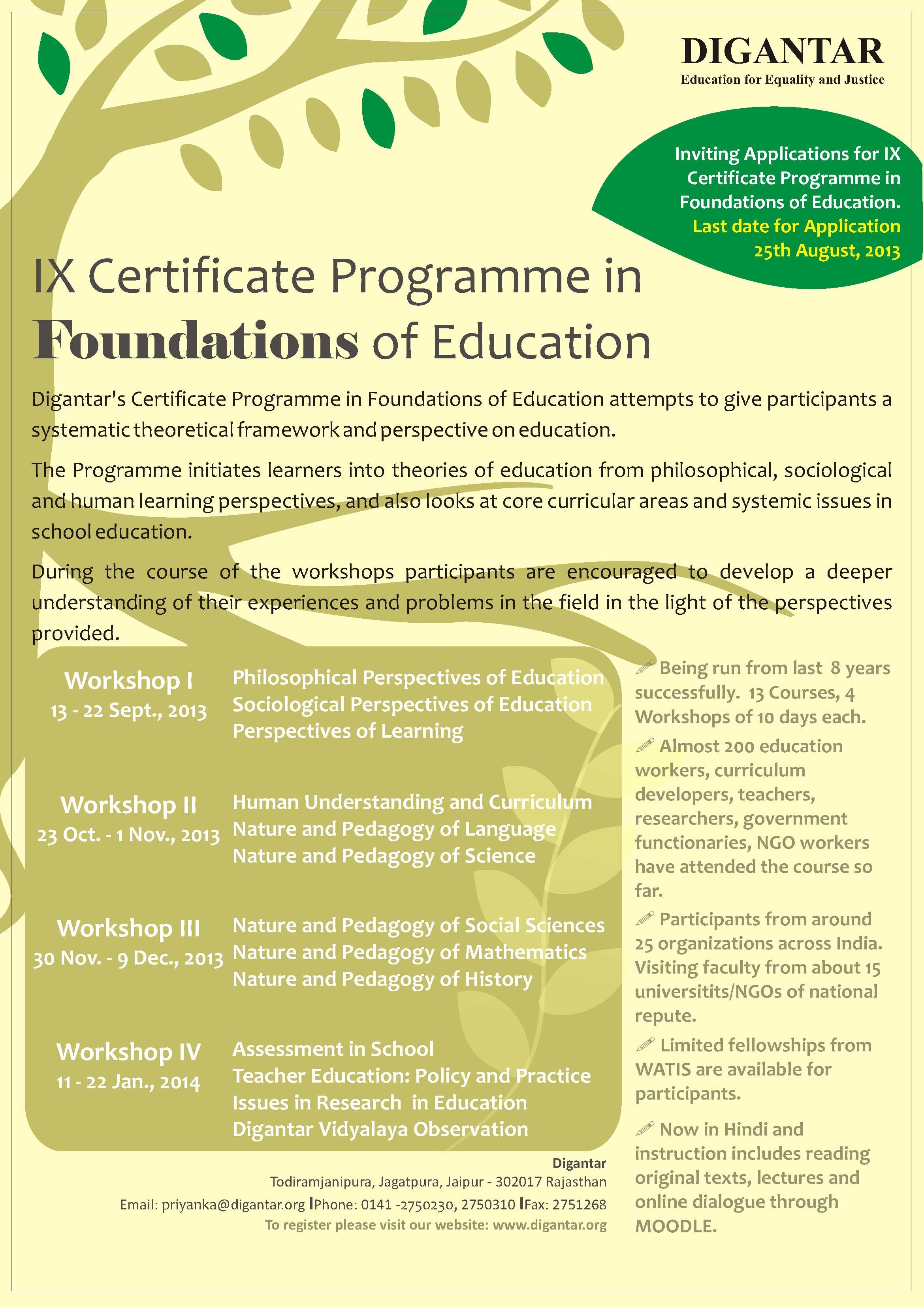
9th Foundations of Education Course

August 4, 2013

Course Announcement


मोदी के वीसा पर बहस

July 28, 2013

रोहित धनकर

मेरी छोटी टिपण्णी “मोदी का वीसा और भारतीय संप्रभुता” पर दो गंभीर ऐतराज दर्ज किये गए है। मैं दोनों का उनकी टिप्पणियों के लिए धन्यवाद करता हूँ, और अरुणा का मेरी बात को ठीक परिप्रेक्ष्य में देखने के लिए। दोनों ही ऐतराज लंबे हैं, तो मैं ने सोचा इस संवाद को आगे बढाने के लिए मैं अपनी बात को थोड़ा और साफ़ करदूं। मैंने मूल टिपण्णी हिंदी में की थी इस लिए मैं इसे हिंदी में ही आगे बढ़ा रहा हूँ। पर एक तो मेरी वर्तनी बहुत खराब है और दूसरे टंकण बहुत कमजोर, सो इस में बहुत गलतियाँ होंगी। उनके लिए माफ़ी चाहता हूँ, आशा है गलतियों के बावजूद बात साफ़ तौर पर कह सकूंगा।

मुख्य बात पर आने से पहले: मनोज जी ने मेरे “दोगले” शब्द पर ऐतराज किया है, उनका मानना है की यह लैंगिक गली देने का तरीका है। यदि ऐसा है तो माफ़ी चाहता हूँ। मैंने इस शब्द का उपयोग “दोहरे मानदंडों” के लिए किया था।

मैं जानता हूँ की जो कुछ मैं कहने वाला हूँ वह आज के भारत में राजनैतिक पवित्रता के विरुद्ध जायेग। पर मैं यह भी मानता हूँ की राजनैतिक पवित्रता (political correctness) आम तौर पर विश्लेषण और चिंतन का गलाघोंटती है। लोकनन्त्र के लिए लोगों का बड़ी संख्या में राजनैतिक-पवित्रता का बाना पहन लेना बहुत अशुभ् हो सकता है। अतः अपनी बात कहा रहा हूँ।

मैं मूलतः नीचे लिखी बातें कहना चाहता हूँ:

१. भारतीय बुद्धिजीवी इस मामले में दोहरे मानदंड अपना रहे हैं।

२. अमेरिका से इस मामले में गुहार लगाना भारतीय संप्रभुता और भारतीय अस्मिता के विरुद्ध है।

इसके अलावा मैं एक बात अब और कहूगा:

३. मोदी और बीजेपी की राजनीती पर टिपण्णी।

दोहरे मानदंड

राजीव गाँधी और जीलानी के उदहारण मैंने दोहरे मानदंडों की बात साबित करने के लिए दिए थे। इस के और भी दर्जनों उदहारण दिए जासकते हैं। जिस अमेरिका से मोदी के विरुद्ध हम फतवा कायम रखवाना चाहते हैं उसी अमेरिका के चीन और मध्या-पूर्व में मानव-अधिकारों की बात उठाने पर उसे अपने हितों के लिए सत्ता का खेल कहते हैं और उसका विरोद्ध करते हैं।  जिस अमेरिका से हम मोदी के विरुद्ध अपनी बात की पुष्टि चाहते हैं उसी की इजराइल और फिलिस्तीन नीति को मानव-अधिकारों के विरूद्ध कहते हैं। मोदी ने मानव अधिकारों और इंसानियत के विरूद्ध जो गंभीर अपराध किये उनकी भर्त्सना हम दुनिया के सबसे बड़े दादा और मानव-अधिकार जैसी महत्त्वपूर्ण धारणा का दुरुपयोग करने वाले से चाहते हैं। अतः हम एक बड़े अपराधी से छोटे अपराधी के विरूद्ध फ़तवा चाहते हैं। मोदी के अपराध को भारतीय मानस में अक्षम्य बनाये रखने के लिए हम अमेरिका के अपराधों की अनदेखी करने को तैयार हैं, उसे मानवीय अपराधों के मामले में एक न्यायाधीश की भूमिका देने को तैयार हैं। ऐसे दर्जनों विरोधाभास गिनाये जासकते हैं। यह कहा जासकता है की अमेरिका ने हजार गलतियाँ की होंगीं, पर इस मामले में उसने सही कदम लिया है तो हमें उस को पुष्ट करना चाहिए। वास्तव में मैं इस बात का हामी हूँ, पर तभी जब (१) हम यह नियम हमेशां माननें, और (२) जब हम सही कदम को पुष्ट करते हैं तो गलत कदमों को अनदेखा ना करें। हम अपने देश की राजनीति में पहले नियम को नहीं मानते और अमेरिका के सन्दर्भ में दूसरे की अनदेखी कर रहे हैं।

प्रो. अहेमद कहते हैं की दोहरी जबान लोकतंत्र में कोई बड़ी बुराई नहीं है। वे शायद यह भूल गए की लोकतंत्र विवेकशील संवाद और आपसी भरोसे पर ही चल सकता है। संवाद में विवेकशीलता और सम्वादियों में आपसी भरोसा खत्म हो जाने पर भावनाओं पर आधारित भीड़-तंत्र में बदल जाता है लोकतंत्र। भारत में इस बीमारी के उदहारण और इसकी तीव्रता लगातार बढ़ रही है। दोहरे मापदंड विवेक और भरोसे के बहुत बड़े विनाशक होते हैं। हम इस देश में लोकतंत्र को बचाना चाहते हैं तो हमें साफ़ मानदंडों और उनके कड़ाई से पालन की बहुत जरूरत है। हम अपनी तात्कालिक जरूरतों के लिए इन की जितनी अनदेखी करेंगें उतना ही लोकतंत्र का नुकशान करेंगे। और लोकतंत्र के बिना धर्म-निरपेक्षता, व्यक्ति की गरिमा और मानव-अधिकारों की रक्षा संभव नहीं है।

भारतीय संप्रभुता और अस्मिता

अमेरिका किस को वीसा दे और किसको ना दे यह उसका अंदरूनी मामला है, इस का फैसला वह अपने क़ानून के हिसाब से करेगा। (उमर को लगता है भी भारतीय संविधान हमें अमेरिका से इस मामले में पूछने का हक़ देता है। भारतीय संविधान हमें अपनी बात कहने का हक़ देता है, किसी दूसरे राष्ट्र से कुछ भी पूछने का नहीं।) मोदी के भारत में रहने और राजनीति करने पर आप रोक नहीं लगा सकते, भारतीय कानून के तहत उसके अपराधों की सजा नहीं दिलवा सकते। इसमें हम भारतीय सम्विधान और कानून की कमी देखते हैं। और उस कमी की तात्कालिक पूर्ती के लिए अमरीका के संविधान और कानून की मदद चाहते हैं। यह हमारी अपनी कमियों पर पर्दा डालना है, हमारी जिम्मेदारी हम किसी और से पूरी करवाना चाहते हैं।

एक रोचक बात यह है की मोदी को नायक मानने वाले और उसको खलनायक मानने वाले एक चीज पर पूरी तहह से सहमत है: कि अमेरिका की जमीन पवित्र जमीन है। दोनों समझते हैं की वहां पहुँच जाने से मोदी के पाप धुलजायेंगे। एक उसको पापमुक्त साबित करना चाहते हैं इस लिए उसे वहां जाने का हक़ दिलाना चाहते हैं; और दूसरे पापी बनाये रखना चाहते हैं इस लिए उसे वहां जाने से रोकना चाहते हैं। दोनों की कसौटी एक ही है: अमेरिका की पवन भूमि पर पहुंचना। भारतीय संप्रभुता और अस्मिता के लिए दोनों बराबर के घातक हैं। दोनों अमेरिका को और उसके काननों को न्यायाधीश मानाने को तैयार हैं।

प्रो. अहमद को लगता है की यह कानूनी नहीं नैतिक भंगिमा है। यह मोदी की दोषमुक्ति की कोशिश के विरुद्ध कदम है। मैं पहली बात तो यह कहना चाहूँगा की यह निश्तित तौर पर कानूनी मामला है। मानव-अधिकार और वीसा देना दोनों कानून के तहत चलने वाली चीजें हैं। दूसरी बात यह की हर कानूनी मामला लाजमी तौर पर नैतिक होता है। मैं जो भारतीय संप्रभुता की चिंता कर रहा हूँ और भारतीय अस्मिता का हवाला दे रहा हूँ यह भी नैतिक मामला है, और संप्रभुता कानूनी भी है।

उमर को लगता है की मेरी बात संकुचित राष्ट्रीयता की बात है, वह आज की पीढ़ी है (मैं निशित तौर पर पुरानी पीढ़ी हूँ, J, और इसमें न मुझे ऐतराज है न ही शर्म) और आज की पीढ़ी को पूरी दिनया की चिंता है। यह अच्छी बात है, यदि ऐसा है तो। पर मेरा तर्क दुनिया की चिंता करने और पूरी मानवता को किसी मुद्दे पर सहमत करने के विरूद्ध नहीं है। मुझे कोई ऐतार्राज नहीं है यदि लोग अमेरिका की जनता को संबोधित करें, मानव सिधान्तों के आधार पर, बराबरी के स्तर पर, कम से कम इस मामले में। मुझे ऐतराज अमेरका के राष्ट्रपति को संबोधित करने में है। पूरी दिनया के लोगों में मानव होने के नाते संवाद होना चाहिय, विचारों का आदान-प्रदान और विवेकसम्मत आग्रह होने चहिये। मानव के नाते हम एक हैं, मैं समझता हूँ मानव के नाते हमारा भविष्य भी एक है। पर इस वक्त मानवीय समुदाय विभिन्न संस्कृतियों और राज नैतिक इकायों में बंटा हुआ है। ये राजनैतिक इकाइयाँ अपने हितों को सर्वोपरी रखती है और अपना प्रभुत्व दूसरी राजनैतिक इकाइयों पर और उनके नागरिकों पर जमाने की जद्दोजहद में मशगूल हैं। मोदी के वीसा सम्बन्धी गुहार–चाहे वह उसे वीसा देने की हो या उसका विरोध करने की–अमेरिका के वर्चस्व और उसके न्यायसिद्ध होने की स्वीकृती है। मुझे इस से ऐतराज है। मैं इस बात का हमायती हूँ की भारतीय अपनी न्याय का फैसला खुद करें। आज अमेरिका से मोदी के मामले में हम सहयोग चाहते हैं, तो कल आप उसकी आपके अंदरूनी मामलों में दख़ल का विरोध नहीं कर पायेंगे। और अमेरिका का दूसरे देशों के प्रति न्याय का इतिहास बहुत आस्वस्त करने वाला नहीं है।

मोदी-बीजेपी की राजनीति और उसका विरोध

मेरे चिचार से बीजेपी की राजनीति लोकतंत्र के विरूद्ध है, क्यों की वह धर्मनिरपेक्षता के विरूद्ध है। मोदी और संघ उस राजनीति के सबसे खतरनाक चहरे हैं। जो भारतीय धर्म-निरपेक्षता और लोकतंत्र की चिंता करते हैं उन को इस राजनीति से निपटने के तरीके ढूँढने चहियें। पर मैं जानता हूँ की भारत में उन लोगों की संख्या भी करोड़ों में है जो बीजेपी और मोदी की राजनीति को लाकतंत्र के हित में और देश के लिए शुभ मानते हैं। मैं उन सब को एक साथ संकुचित रूप से अपने हित साधने वाले, या मूर्ख या दूसरों से घ्रणा करने वाले पाखंडी नहीं कह सकता। निश्चित रूप से उनमें संकुचित मानसिकता वाले, दूसरों से घ्रणा करने वाले, हिन्दुओं का वृचास्वा चाहने वाले और मूर्ख भी है। पर उनमें परिप्रेक्ष्य के भेद रखने वाले फिर भी लोकातान्तान्त्रिक मानसिकता वाले भी हो सकते हैं। मैं अपने विश्लेषण के प्रति इतना आश्वस्त और निशित नहीं हो सकता की मेरे विचारों के अलावा बाकी सब को या तो मूर्ख मानलूं या धूर्त। ऐसा मानना मेरी स्वयं की लोकतंत्र में विवेकसम्मत आस्था की पोल खोलदेगा। लोकतंत्र सबको सोचने की, उसकी अभिव्यक्ति की और उसपर अमल करने की स्वतंत्रता देता है। हर एक की आवाज की कीमत स्वीकार करने की जरूरत है। पहले सुनेंगे और समझेंगे तभी सम्वाद होगा, विरोध या सहमति होगी। मैं जैसे इस वक्त अमेरिका से मोदी वीसा का विरोध दर्ज कारने वालों की बात सुन हरा हूँ और उसपर अपना विचार रख रहा हूँ, ठीक इसी तरह मोदी की राजनीति करने वालों की बात भी मुझे सुनानी होगी और उसका विरोध करना होगा। उन्हें निश्चित तौर पर गलत मान कर अनदेखा करना या धूर्त मान लेना  न लोकतान्त्रिक सोच है न ही विवेक सम्मत। [यहाँ “मैं” शब्द का उपयोग एक आम नागरिक के लिए किया गया है, यह रोहित धनकर के लिए व्यक्ति-वाचक नहीं है।]

पर जब एक नागरिक बीजेपी की हिंदुत्व-वादी राजनीति को विभेदकारी मानता है तो उसे जाती वादी राजनीति को भी विभेदकारी मानना होगा। अतः, प्रांतीय, जातिवादी और क्षेत्रीयता वादी राजनीती को विभेदकारी कहना हिंदुत्व-वादी राजनीति का समर्थन हो यह जरूरी नहीं है। यह जहाँ कहीं भी राजनैतिक अशुभ दीखता है उसको वैस ही कहना भर है। मुझे कोई भी मंदिर में मत्था टेकने वाला, धर्म-गुरुओं के चरणों में लोटने वाला, मजार पर चादर चढाने वाला और इफ्तार दावत करने वाला राजनेता धर्मनिरपेक्ष नहीं लगता। यह उनका व्यक्तिगत आस्था की अभिव्यक्ति का सवाल नहीं है, यह वास्तव में उनका जनता को विभिन्न संकेत देने और धर्म के नाम पर वोट मांगे के लिए प्रचार है। यह वे जनता के खर्च पर और अपनी राजनैतिक भूमिका में करते हैं। यदि मीडिया इस पर ध्यान देना छोडदे तो यह सब बंद हो जायेगा। हाँ, यह सब एक जैसा विभेदकारी नहीं है। पर विभेद को भुनाने की कोशिश फिर भी सामान है। इस वक्त हमारे देश में शायद ही कोई लोकतांत्रिक राजनीति कर रहा है। राजनेता या तो जादी वादी हैं, या धर्म-वादी या परिवारवादी (सामंतवादी)। ले दे कर आखिर में वामपंथी बचते हैं जो इन सब से बहुत हद तक मुक्त हैं, पर वे न इमानदार चिन्तक  हैं ना ही दोहरे मानदंडों से मुक्त। यह सब कहने का अर्थ यह नहीं हो सकता की यह हिन्दुत्ववादी राजनीति का समर्थन है। यह सच्चाई–जैसी मुझे दिखती है–का बयान भर है।

आखिर में हमें–जैसा मैंने अपनी टिपण्णी में पहले कहा है–इस विभेद कारी राजनीति से अपने बलबूते पर, अपनी संप्रभुता और अस्मिता की रक्षा करते हुए लड़ना होगा। इसमें दूसरों के प्रमाण-पत्र केवल हमें और विभाजित करेंगे और प्रतिक्रिया पैदा करेंगे।

उमर की कुछ और चिंताएं

उमर को लगता है की मेरी मूल चिंता सम्प्रभुता होती तो मेरी टिपण्णी का बहाव कुछ और होता। यह पूरी बात बिना कहे इस तरफ इशारा है कि में मोदी की राजनीति की तरफदारी कर आहा हूँ। अर्थ निकालने का यही तरीका राजनैतिक पवित्रता का परिचायक है, यह हर उस बात का जो हमें पसंद नहीं है कोई ऐसा अर्थ निकालना है जो उस वक्त अस्वीकार्य माना जाता है। यह राजनैतिक पवित्रता (political correctness) का संवाद को खारिज करने का तरीका है। वैसे मैं कह्दुं कि जो लोग मोदी की राजनीति के हिमायती हैं उनको भी अपनी बात बिना झिझक के कहने का हक़ है, और मैं उनमें होता तो बिना झिझक ऐसा कहता, उमर को अंदाजा लगाने की जरूरत नहीं होती।

उसे आश्चर्य है की मैं राष्ट्रवादी कब से हो गया! मैं तो सदा ही राष्ट्रवादी था। यह अलग बात है की मेरा राष्ट्रवाद न मुझे अपने राष्ट्र की खामिया देखने से रोकता है, ना दूसरे राष्ट्रों को दुश्मन मानाने को प्रेरित करता है और ना ही मेरे देश के और लोगों को राष्ताविरोधी कहने को प्रेरित करता है। उमर, राष्ट्रवादी होना गाली नहीं है, संकुचित होने की निशानी भी नहीं है और मूर्खता भी नहीं है। यह वर्त्तमान समाय में मानवता के अपने आपको विभिन्न इकाइयों में संगठित करने की स्वीकृति भर है। मैं जनता हूँ की राष्ट्रवाद को संपूर्ण मानवता को एक मानने का और मानवीय भाईचारे का विरोधी माना जाता है। पर मैं इस चिंतन से सहमत नहीं हूँ। पर साफ़ करदूं कि मुझे पता नहीं है की राष्ट्रवाद को “patriotism” का समानार्थी नानाजाता है या “aggressive nationalism” का, मैं  यहाँ इस का उपयोग “patriotism” के अर्थ में कर रहा हूँ और इस में मुझे कोई बुराई नहीं दिखती।

उमर को ऐसा भी लगता है की यदि हम अपने आतंरिक मामलों की बात करते हैं तो भारत का जाफना में और बंगलादेश में हस्तक्षेप गलत था। यहाँ बात बहुत लंबी हो जायेगी अतः मैं इतना ही कहूँगा की (१) दोनों मामलों के इतिहास में और गहराई से जाना होगा, और (२) श्रीलंकाई नागरिकों का मत जानना होगा, पाकिस्तानी और बंगलादेशियों के मत जानने होंगे कुछ भी कहने से पहले।

एक और चिंता यह है कि चुनाव जीतने से कोई निर्दोष नहीं हो जाता। ठीक बात है, पर केवल हमारे कहने से भी कोई दोषी नहीं हो जाता। दोषियों और निर्धोशियों का फैसला हमलोग मिलकर और अपने न्यायतंत्र से करेंगे। जिन्हें हम दोषी मानते हैं उनके विरूद्ध अभियान चलाने का हमारा हक़ है, सवाल सिर्फ यह है की वह अभियान हम कैसे चलाते हैं। अभियान चलने के सारे तरीके जायज नहीं माने जा सकते। मेरा विरोध तरीके से है, अभियान से नहीं।

******


मोदी का वीसा और भारतीय संप्रभुता

July 24, 2013

रोहित धनकर
अमेरिका नरेन्द्र मोदी को वीसा नहीं देरहा, इस से बीजेपी बहुत दुखी है। मोदी तो खैर है ही दुखी। इस से कुछ भारतीय बुद्धिजीवी बहुत खुश हैं। कुछ सांसद भी हैं जो ओबामा को चिट्ठी लिख रहें हैं कि मोदी को वीसा न दिया जाए। मोदी सांप्रदायिक राजनेता है, यह शायद सही है। उसका गुजरात के दंगों के पीछे शायद हाथ भी है। इसके बावजूद बुद्धिजीवियों और सांसदों का यह व्यवहार आत्महीनता का और दोगला है।

हम इस बात को छोड़ दें की अमेरिका ने कितने साम्प्रदायिक और हिंसा में लिप्त राजनेताओं को वीसा दिया है और दे रहा है। पर बुद्धिजीवी लोग कभी भी उन राजनेताओं के लिए इस तरह के वोरोध का झंडा नहीं उठाते जो खुले आम सांप्रदायिक है, हिंसा का प्रचार करते हैं और हिंसा में लिप्त हैं। कश्मीरी उग्रवादी और हुर्रियत के जीलानी इस की मिशाल हैं। यह कहा जा सकता है की जीलानी जनता का चुन हुआ सरकार चलने के लिए जिम्मेदार राजनेता नहीं है। ठीक है, मान लेते है कि सरकार चलने वाले राजनेता की जिम्मेदारी अधिक है। पर एक जनता का चुना हुआ प्रधानमंत्री रहा है भारत में जिस का सीधा हाथ बड़े सम्प्रदायिक दंगों में था। इंदिरा गाँधी की हत्या के समय राजीव गाँधी के बयान और हिसा में लिप्त कोंग्रेसियों की तरफदारी इस का प्रमाण है। अमेरिका ने राजीव गाँधी को वीसा देने से मन नहीं किया। भारतीय बुद्धिजीवियों ने कही इस का विरोध नहीं किया। यह दोगला पना  है। पर हम लोग बहुत सामंती मानसिकता वाले लोग है। हम अपने परिवार के ससदस्य की मौत का बदला पूरे सम्प्रदाय से लेने को सम्प्रदायिकता नहीं मानते शायद। राजीव ने अपनी माँ की मौत का बदला लिया इस लिए वह सांप्रदायिक नहीं हुआ। मोदी ने एक सम्प्रदाय के लोगों की मौत का बदला लिया इस लिए वह साम्प्रदायिक है। यह दोगला तर्क है।

पर इस से भी ज्यादा महत्व पूर्ण बात एक और है। मोदी एक भारतीय है जिसे एक प्रदेश की जनता ने अपना मुख्यमंत्री चुना है। वह जनता पूरी की पूरी सांप्रदायिक हो सकती है, पर यह चुनाव भारतीय संविधान के मुताबिक हुआ है। यह संविधान भारत को एक संप्रभु राष्ट्र बताता है। हमारे बुद्धिजीवी लोग और इसी संविधान के तहत चुने सांसद भारत के अंदरूनी मामलों में बहार के उस राष्ट्र का समर्थन चाहते हैं जिसे वे ही लोग पानी पी पी कर गालियाँ देते रहते हैं। जिसे वे दुनिया भर में अपने हित के लिए हिंसा और युद्ध के लिए जिम्मेदार ठहराते हैं। अपने देश की राजनीति में आये सांप्रदायिक विकार को दुरुस्त करने की सीधी जिम्मेदारी लेने के बजाय एक चालाक और अपने हित के लिए न्याय की अनदेखी करने वाले दादा राष्ट्र की मदद लेने में इनको कोई ऐतराज नहीं है। हमारे अन्दर कौन धर्मं-निरपेक्ष है और कौन सांप्रदायिक इस का फैसला हम अपने ही नागरिक भाइयों से संवाद के द्वारा करने की बजाय उनकी आवाज को एक दूसरे देश के हस्तक्षेप से दबाना चाहते हैं। इस में हम अपने संविधान, अनपे नागरिकों और अनापने राष्ट्र की अवमानना नहीं मानते। लगता है हमारे लिए अपने विचार को स्थापित करने के लिए सब किछ जायज है। अपने ही देश में हमारे विरोधी विचार को दबाने के लिए गैर संवादी और विकेक-इतर तरीकों को काम में लेना हमें उचित लगता है। हम अपने विचार की सत्यता के प्रति इतने आस्वस्थ हैं की उस के अलावा किसी चिचार के साथ संवाद से रास्ते निकालने या अपने भूले हुए नागरिकों को विवेक से लोकतंत्र के रास्ते पर लाने के बजाय उधार की ताकत से उनको नीचा दिखाना चाहते है। यह दूसरों को अपने आतंरिक मामलों में आमत्रित करने के अलावा क्या है? यदि साम्प्रदायिकता का यह विकार और बढ़ता है तो इसे दूर करने के लिए क्या हम अमेरिका को अपने ही देश के विरूद्ध युद्ध के लिए आमंत्रित करेंगे? मुझे नहीं लगता किसी और की ताकत हमें अपनी इस बीमारी से निजात दिला सकती है, हम इस के लिए अपनी संप्रभुता को बेचने के लिए तैयार हो जाएँ तो भी नहीं।

यह टिपण्णी मोदी को स्वीकार करने की हामी नहीं है, बल्कि मोदी जैसी खतरनाक राजनीति को अपने राष्ट्र के विवेक से रोकने की वकालत है। यदि हम में यह दम नहीं है तो न हम लोकतंत्र की रक्षा कर पाएंगे न ही संप्रभुता की।


Place of religion in public schools: Part 4

July 22, 2013

Religious behaviour of students and teaches in the school

Rohit Dhankar

We are discussing place of religion in public schools in a secular democracy. What I am saying here may be totally irrelevant in a theocratic state or a country which does not place any value on secularism. Secondly, even within a secular democracy we are interested in public schools, most of which are state funded. Some of what is said may be applicable to denominational schools, but rest may not.

I am assuming (it could be argues quite plausibly, but I am leaving that out for lack of space) that education system in a secular democracy is duty bound to help children grow up into active and critical citizens who can make informed choices and can defend those choices in public. Of course education will have other aims as well; but I am deliberately taking this one for the sake our argument.

Democracy gives every citizen equal rights to autonomously choose the life they want to live within the constitutional framework; which is designed to promote equality, personal autonomy, liberty and freedom. Thus in a democracy every citizen needs to learn: 1. To understand and respect the others views and freedoms; and 2. To care about them. These seem to be necessary qualities of an active and critical democratic citizen; though not enough in themselves. Therefore, the job of the school becomes to help students understand others’ views and respect other people as equals even if one can not agree and respect their views. (There is a difference between respecting a person and respecting a belief. Demand to respect all beliefs equally is an impossible hypocrisy; while demand of equal respect to all people is a democratic ideal, and is possible.) This is a very difficult attitude to develop, and perhaps no one succeeds completely; but we all have to keep trying thorugh all our lives; that is, if we want to live in a democracy.

We should understand that a secular state can not preach anti-religion ideas. It has to give people freedom to choose their personal beliefs; the schools can preach neither religious dogma, not atheistic ones. They can simple present them and analyse them. A secular school can not disdain, prohibit or insult in any way religious behaviour of its students. It can make its policies strictly on the secular and constitutional grounds but if the children want to participate in pooja or namaz, and even if remain out of school for these purpose, it can do nothing. However, the usual penalty for being absent, if there is such a rule in the school, applies to those who remain absent for pooja and namaz as well. It seems to me that the school should also bring the fact that by remaining absent they are losing opportunity to learn to students notice. But the final choice has to be that of the students. This is necessary as students have to learn to weigh pros and cons of their decisions and learn to be responsible for them. But at the same time he school, to my mind, should also not deviate from its settles time-table to make room for such activities. For example, there could be a demand for having Tuesday or Friday as the weekly holiday. All other things being equal, the schools should not consider that on the religious grounds of the communities living around it. In India there are too many religions, we shall never be able to manage such adjustments. However, in a mono-religious society such adjustments may be possible; but mono-religious societies are rarely, if ever, secular and democratic.

A secular rational attitude demands that one does not curb or promote any belief system through force and rules. Not even the secular and rational belief system. The only possible way is that of dialogue and rational persuasion where people make their own decisions on the basis of their own lights. So a school can not stop children from attending their pooja or namaaz even if they remain absent from the school for that purpose.

Teachers’ display of religious behaviour or symbols in the school

Some secular states take the position that as public functionaries teachers should not be allowed to display such behaviour or symbols. To my mind it is a very complex issue. Let’s take the example of thick band of moli (the red-white thread that Hindu priests tie on the wrists of their yejmaans on every auspicious occasion) which many Hindu teachers, officials, politicians, and so on display prominently these days. Actually I distinctly remember that about two decades back it used to be a thin kachcha dhaga that used to break on its on mostly by the end of the second day. Now it has become a think band which does not break for months, and usually becomes very dirty. It has nothing to do with Hindu religion as such. It is an assertion and display of identity. It is a social-political act, associated with religion but not unalienable part of it. Similarly, prominent display of a cross around a Christian’s neck or a round skull cap on a Muslim’s head are markers—and these days also an assertion, like moli—of identity and not really essential part of religion. I think it could be plausibly argued that in modern India a feeling of underlining difference with others is also mixed with these markers of identity. Conceptually, all identity marks have an element of difference from the other, as any identity has to do two things: proclaiming who you are and also who you are not. Our ambiguous attitude to religion and habit of our democratic state to prostrate before any thing vaguely religious have made these symbols into assertion of political power, solidarity to ones own community and challenge to others. Thus, as I understand the situation these symbols at the present juncture in Indian polity are dividing the society; and slowly but certainly nudging us to move away from dispassionate secular politics, pushing us towards aggressive identity politics where democratic principles are definitely a casualty.

Personally, I feel that we should have a dress-code for all public servants. And these markers should not be allowed in that dress-code. Not because the state wants to take an anti-religion or anti-identity stand; but simply because a public servant should, particularly in present times, make all efforts to communicate that whatever her religious and political views she stands in absolutely identical relationship with all citizens in her role as a public servant. That is a stand in principle; but that can not happen in present day India. Therefore, as a compromise somewhat uncomfortable compromise one has to accept the display of these markers in office. That brings an added responsibility on the public servants that they should communicate in their behaviour a totally secular dealing with all citizens; people should develop a confidence that in spite of these identity markers the person will act according to our secular constitution. At present this is not communicated. And so there is a problem here.

A teacher, in this sense, is a public servant. She should, ideally speaking, refrain from public display of these makers, but our constitution does not prohibit it; therefore, even strictly secular schools can not ban or strongly oppose these practices. As a result we will have to live with them. Sadly, enough.

Preaching of ones religion in the school

In short no school has the right to preach any religion, and so no teacher can preach one’s religion in the school. But we need to understand the place of religion in curriculum and school life in a little more detail.

In addition to what we have discussed above—display of religious behaviour or symbols in the school—lets make two more categories: ‘teaching religion’ and ‘teaching about religion’. Teaching religion here would mean teaching religious beliefs in the school and hoping that the children will acquire those beliefs. It will also include religious practices in the schools—for example, various kinds of prayers in the school, including Saraswati and Gandhi’s supposed to be secular bhajans. Teaching about religion would simply means an attempt to make the religious belief systems known to the students, understand them and examine them as one examines any political, social or scientific theory.

Teaching religion is clearly contradictory to the ideal of democratic citizenship. The Morning Prayer in the schools, saraswati statues, gayatri-mantras on the walls etc. are all non-secular and objectionable practices. This certainly amounts to practicing religion in schools. Actively teaching religion in schools will also be objectionable on the same token.

Teaching about religion, however, seems to be a logical necessity for ay curriculum in a secular country. We have to provide children with the knowledge base needed to understand the history, culture and belief systems of all citizens if we want them to make independent and informed choices in life. Even if we do not like religious belief systems people live by them and the children may make the same choice. It is the duty of the school to inform them about these possibilities, as impartially as possible. But school can not present them as necessarily true beliefs. If we want our children to be informed about Ram and Karishna we will have to present views of those who consider them as avataras, we have to present the views of those who consider them historical figures, and also of those who consider them simply imaginary mythological figures, who never actually existed. We have to share these views with available evidence, if any. We can say that there are some Hindus who think that Ram was Vishnu’s avatar; but we also have to inform them that there are other people, Hindus as well as non-Hindus, who believe neither in Vishnu nor in Ram as his avatar. We will have to present the critique of what is supposed to be their lives and preaching. For example, we will have to inform children that in the eyes of some agniparisksha was injustice to Sita and banishing Sita from Ayodhya later was simple desire to cling to power and cowardice in some people’s eyes. I am putting all this rather in a crude sense; but the point I am making is for presentation of various contrasting views with their arguments and available evidence. One can make that as sophisticated as one pleases or the occasion demands. In case of Muhammad (as he is definitely a historical figure) we have to talk of him exactly as we talk of, say Marx, or Plato, or Nehru, or Buddha or Mahavir. We have to inform the children that Muslims consider him the last and final prophet. But we will also have to inform that there are plenty of people in the world who do not believe in God so they think no one could really be a prophet or an avatar or a sun of God. Therefore, all prophets and self-proclaimed avatars were either misguided people or they deliberately spread lies. That, however, does not preclude the possibility of spreading lies for imagined good of mankind. We will have to present both views with equimindedness, and leave the children to make their own decision. What I am arguing for is that teaching about religion will have to be done in a rational manner. All religious figures in this scheme will get only as much respect as any philosopher or historical figure; no less no more. They will face all the questions that other philosophers and historical figures face, whether they like or not. Similarly all religious scriptures will have to be analysed exactly as any other book on philosophy or political theory. I believe that would be of immense benefit to the children and to the country.

But that will also require a huge amount of preparation. We have to have balanced and authentic curricula, we have to decide at what age the children should be introduced to what kind of issues and information, we will have to have a huge number of teachers who can teach in a rational and impartial manner. Perhaps team teaching could be explores—education about religion could done by a team that has teachers from different religions in it, and not by a single teacher. Are we ready for it? I do not know, let sociologists and political scientists answer that. Should we teach about religion in this sense? Yes, I am certain of that. Should teachers preach their own religions in school? Not at all.

That leaves us with one more issue from the initial discussion. Teachers’ religious behaviour out side the school. The next and last part of this series will deal with that.indus HHh


To be Concluded.

******

22nd July 2013

Rohit Dhankar, Azim Premji University, Bangalore and Digantar, Jaipur

Rohit.dhankar@apu.edu.in


The animal school: a confounding fable?

July 22, 2013

Rohit Dhankar

Background

In last one month I encountered a curious little fable doing rounds in emails and on social networking sites. It is circulated in various truncated forms and some Indian sites claim that the author is unknown. However, a little googling reveals (how authentic Google revelations are is a different matter) the fable was written by George Reavis in 1940s and is currently available in an illustrated book published by Crystal Springs Books. The complete fable is given below for those who do not know it; those who have had more than their fill of reading it can go directly to the next section.

——————————————————————————————————–

The Animal School: A Fable

by George Reavis

Once upon a time the animals decided they must do something heroic to meet the problems of a “new world” so they organized a school. They had adopted an activity curriculum consisting of running, climbing, swimming and flying. To make it easier to administer the curriculum, all the animals took all the subjects.

The duck was excellent in swimming. In fact, better than his instructor. But he made only passing grades in flying and was very poor in running. Since he was slow in running, he had to stay after school and also drop swimming in order to practice running. This was kept up until his webbed feet were badly worn and he was only average in swimming. But average was acceptable in school so nobody worried about that, except the duck.

The rabbit started at the top of the class in running but had a nervous breakdown because of so much makeup work in swimming.

The squirrel was excellent in climbing until he developed frustration in the flying class where his teacher made him start from the ground up instead of the treetop down. He also developed a “charlie horse” from overexertion and then got a C in climbing and D in running.

The eagle was a problem child and was disciplined severely. In the climbing class, he beat all the others to the top of the tree but insisted on using his own way to get there.

At the end of the year, an abnormal eel that could swim exceeding well and also run, climb and fly a little had the highest average and was valedictorian.

The prairie dogs stayed out of school and fought the tax levy because the administration would not add digging and burrowing to the curriculum. They apprenticed their children to a badger and later joined the groundhogs and gophers to start a successful private school.

———————————————————————————————————————

The point it makes

At different times in history education system and curricula get into different kinds of ruts. The educational pendulum may swing to the extremity of uniformity and rigidity in curriculum, pedagogy, assessment etc. A sharp reaction, equally extreme, may be needed and even be very useful in correcting this extreme swing. Such reactions may come in the form of fable, slogans, one-liners, wise-cracks and so on; in addition to more reasonable critique. They serve the purpose of correcting the aforementioned swing well. This does a good job of countering excessive uniformity and rigidity.

But then some of these fables, slogans, etc. may acquire their own life beyond their usefulness, get interpreted into various ways, acquire a status of universal wisdom. At this stage they become problematic and confounding. It seems The Animal School (TAS) has entered that stage of its life.

Problems with it

In the internet gentry it seems to have become a gospel truth. There are sites that interpret it for corporate training (they can use anything, actually, for them making a point is never a rational affair, it is psychological impact they are after), pedagogues that use it to buttress multiple intelligence theory, and some make a fantastic child-centric point. Below I will try to counter some such attempts.

MI theory

First, the MI theory can hardly stand a rigorous scrutiny on conceptual and psychological grounds. The criteria given by Haward Gardner are rather loose, overlapping and do not apply properly to all varieties of so called intelligences. The book Frames of Mind perhaps did a reasonably good job of countering the equally bad concept of Intelligence Quotient, but that is almost all about it. Psychology is still struggling to understand if the various so-called intelligences are manifestations of general cognitive abilities or they are standalone independent capabilities.

Even if one takes MI theory as acceptable theory of intelligence and learning (Gardner himself did not workout its pedagogical implications initially), this theory does not say that people have only one or a few of these intelligences. The MI’s claim is that we have different kinds of intelligences and we may be better at different sets of intelligences; there is no reason to interpret intelligence only as language, mathematics and reasoning. There could be others, like, muscular, bodily-kinetic, etc. That does not mean that someone with, say, linguistic intelligence will not have bodily-kinetic or logical-mathematical. Nor does that mean attempts to strengthen by logical-mathematical intelligence will destroy my bodily-kinetic one. In TAS squirrel can climb but can not fly at all. The TAS goes much beyond MI, it tales a leap and ends in confusion.

General problems

The TAS suggests that there are as much differences in children’s interests and natural abilities as exist in eagle and squirrel. Squirrel has no ability to fly, and its body structure is totally unfit for that purpose. The eagle may struggle at climbing, but its body structure is unlikely to allow excelling in it. They have evolved that way. Do we want to suggest that humans have such natural, innate and absolutely inviolable sets of capabilities and limitations?

Most people who like this fable are also strong advocates of equality in human societies. What are the implications of acceptance of innate and binding natural capabilities for equality? Some may be good at administration and ruling and some others for scavenging; isn’t it? And from the birth, to boot. What are the implications of acceptance of such a theory on social and political equality? Are we ready to accept those implications?

Most of the world lives in democratic societies today, at least in terms of aspirations. Democracy is predicated on individual autonomy, freedom and justice. If someone is very good at music but is totally nincompoop in, say, social relations and understanding politics, how that person is going to fare in modern society? His autonomy, freedom and rights will depend on others goodwill and pity. And unfortunately autonomy, freedom and rights do not happen to be the kinds of things which others can provide this musician of ours; they have to be earned, struggled for and guarded. What kind of general abilities are required to do that? It seems, squirrel can live by climbing alone and can disregard flying; but a human being may not be able to live by music alone and disregard everything else. May be average achievement in a well defined set of understanding and abilities is not such a bad thing after all. The human excellences in particular fields have to be over and above the common abilities absolutely essential for all.

We live in a very complex society, and can not help it. That is what we are. Living in a complex society demands a wide range of capabilities; language, mathematics, science, social sciences, etc. are all parts of that wide range of capabilities. We can not do without them. Alas, our lives are not like squirrels, elephants, eagles and badgers. Our children will face much greater problems in life if they neglected the capabilities counted in general education; difficulties they face in mastering the wide range of capabilities in school are just nothing compared to what they might have to face if they neglected them.

******

19th July 2013

Rohit Dhankar, Digantar, Jaipur and Azim Premji University, Bangalore.

Rohit.dhankar@apu.edu.in